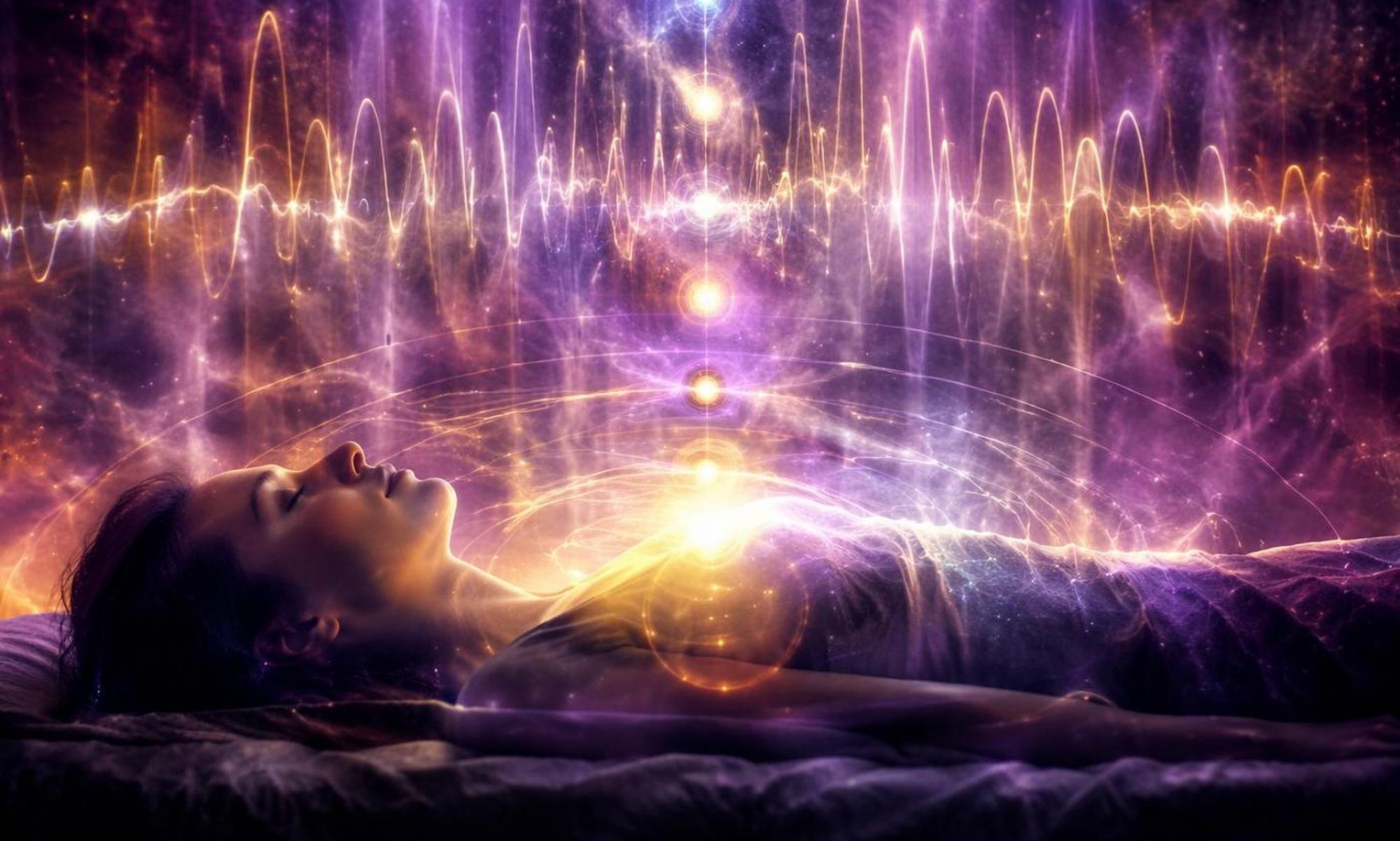
What is Reiki?
Reiki is a Japanese energy healing technique developed by Mikao Usui in the 1920s. Classified as a complementary health approach or alternative medicine, it involves practitioners placing their hands lightly on or above the body to channel “universal energy.” This practice aims to facilitate the body’s natural healing response and encourage emotional and physical wellbeing.
How does it work?
Reiki facilitates healing by channeling “universal life energy” through a practitioner’s hands to restore internal balance. By clearing blockages within the body’s energy centers (chakras), the practitioner uses light touch or near-body hovering to stimulate the recipient’s natural recovery process. This transfer of energy promotes deep relaxation, stress reduction, and overall emotional and physical well-being.
What happens in your session?
- Preparation and Intake Before you arrive, I prepare through grounding and attunement to ensure an optimal session. Upon arrival, we will briefly discuss your health goals.
- Beginning the Session You will lie fully clothed on a treatment table. After obtaining your verbal consent, I use specific Reiki symbols to initiate the flow of energy.
- The Healing Process By placing my hands lightly on or just above your body, I act as a conduit for “universal life energy.” I use my intuition to guide the session, focusing on where your body requires balance rather than just the symptomatic area. Because energy flows holistically, you may experience varying sensations—such as warmth or coolness—as energy is integrated or released. If we’re adding a sound therapy, I add a pure waveform at a particular frequency your body may need for healing. This may accelerate your body’s healing by activating the cells for a particular purpose.
- Closing I conclude the session with closing Reiki symbols and remain available to discuss your experience or answer any questions.
What am I supposed to experience?
One may experience anything from nothing to extreme emotional release or physical healing. If one is wondering about the extreme cases, some don’t feel anything, others feel their tumors shrinking, and unhealthy cells repairing themselves. No one can make any promises. What I commonly hear is the following (from most to least common): calmness, relaxation, feeling blessed, feeling warm/cold cycling at times, tingling, current passing through, seeing colors even with eyes closed, heightened senses, presence of entities.
Also, people’s experiences may vary from session to session. It’s usually correlated with openness to receiving such sensations and being relaxed. At the end of the day, it really depends on the person receiving the Reiki, not the facilitator. Keep in mind – Reiki Masters are just human beings like anyone with no superpowers.
Is it safe? Are there side effects?
Reiki is completely safe for all ages, including pregnant women, children, the elderly, and animals. It is a gentle, non-invasive complementary therapy with no known harmful effects.
When should I not consider it?
The only caution Reiki masters need to pay attention to is for broken bones. The belief is that Reiki fast-tracks the fusion of broken bones, and if they’re not set correctly, it could increase the risk of imperfect bonding. Otherwise, there is no physical or psychological manipulation.
Does it conflict with medicine?
Reiki is an easy and safe complementary treatment to conventional medicine, even in extreme cases such as chemotherapy and surgery recovery. If anything, it reduces the side effects and harm caused by those chemicals that play a role in your healing. Major hospitals and cancer centers offer Reiki as a supportive therapy.
Does it conflict with religion?
This question has a complicated answer. It’s both: yes and no.
No: Reiki does not conflict with any faith. It’s about universal energy that flows through each of us, including every living being in this universe. Example: Animals don’t belong to any faith or religion. I personally don’t hold any religious beliefs, which allows me to welcome any.
Yes: If one believes Reiki conflicts with their internal beliefs, the healing won’t be effective because the body will “block” the natural flow during the session.
What to look for in a good Reiki practitioner?
I’ll use the cable analogy, although everyone’s experience will be different. We, Reiki practitioners, play the role of “a cable,” completing the circuit and passing electricity between two nodes (node one – universal energy; node two – you). Indeed, one cable may have slightly better conductivity than another, although they serve the same purpose.
I also incorporate sound therapy in my Reiki sessions for those who may need an additional healing “boost.” This is not a common practice by Reiki practitioners.
What is sound therapy?
Sound therapy is a practice that uses tones/frequencies to create vibrations that promote relaxation and stress release, supporting healing. I use a highly precise signal generator to produce a pure waveform at a desired frequency to address a specific ailment. When combined with Reiki and Chakra alignment tones, it produces results greater than anyone could achieve.